The Cycle to Work scheme is an initiative run in countries including the UK and the Netherlands to promote cycling to and from work and reduce environmental pollution. An employer buys a bike and safety equipment and hires it to the employee, who repays through salary sacrifice and can buy the bike at the end. Employers save 15% of the total salary sacrifice value through reduced National Insurance Contributions.
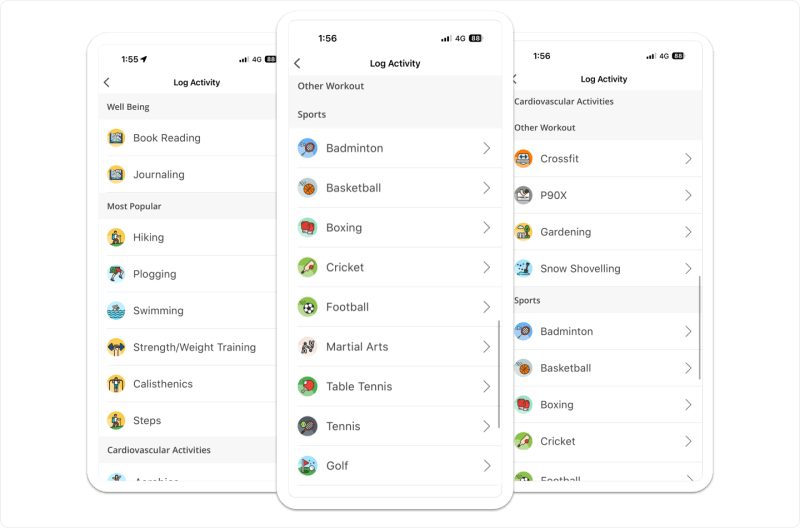
Employers running cycling activities as part of a wider wellness program may want to track participation and progress over time. Cycling can be logged in a wellness platform like Vantage Fit alongside 30+ other activity types, with activity recorded against weekly movement goals.
Key Takeaways
- A cycle to work scheme lets an employer buy a bike and safety equipment and hire it to an employee, who repays through salary sacrifice over a period of up to 12 months.
- The scheme runs in countries including the UK and the Netherlands, and it is open to employers in all sectors but not to self-employed people.
- Bikes need far less parking space than cars, which is a second saving for employers on top of the tax relief.
- The cost of bikes and accessories can be treated as capital expenditure, so employers can claim capital allowances against it.
- The scheme works best alongside practical support: secure bike parking, lockers, on-site repairs, and incentives that reward employees for riding.
A cycle to work scheme is open to employers in all sectors, though it does not apply to self-employed people. Employees effectively ‘hire’ a bicycle for a set period and pay for it by a deduction from gross salary via a salary sacrifice arrangement, usually over up to 12 months. At the end of the hire period, they have the opportunity to buy the bike from the bike shop.
Being physically active is essential for a healthy lifestyle. Regular physical activity can help protect you from dangerous diseases like obesity, heart disease, cancer, mental illness, diabetes, and arthritis. Higher rates of health problems are associated with a sedentary corporate lifestyle.
Regularly riding your bicycle is one of the best ways to reduce your risk of such health problems. Cycling to work is one of the most time-efficient ways to combine regular exercise with your day-to-day routine.
Cycling has many health benefits such as-
- Increased cardiovascular fitness
- Increased muscle strength and joint mobility
- Decreased body fat levels
- Improved posture
- Decreased stress levels
- Prevention of health diseases
How does the cycle-to-work scheme benefit companies?
As the employees remain healthy and fit, an initiative like this works in favor of the employers. Productivity increases as absenteeism decreases. The employers also save on parking costs.
In many countries, various incentives are provided to employees if they choose to cycle to and from work.
In the Netherlands, tax credits are offered as incentives for its population to cycle to work. Every Dutch citizen who rides a bicycle to work gets a preset amount per km, and the amount is also tax-free.
Amsterdam, the capital of the Netherlands, is one of the most bicycle-friendly cities in the world. There are more bicycles than people. Cycling accounts for almost half of all journeys to work in the city of Amsterdam alone and is the reason why the country calls itself “the bicycling nation of the world.”
Japan, Germany, and Italy each see around 15% of commuting trips made by bicycle, while the Netherlands and Denmark are both over 25%, according to data adapted from A Global High Shift Cycling Scenario (Institute for Transportation and Development Policy and UC Davis, 2015). The United States and the UK sit below 1%.
There are many benefits of a cycle-to-work scheme by employers. They are :
Benefits to the Environment
Bicycle riding minimizes fossil fuel usage. It is a pollution-free mode of transport. Billions of tons of poisonous gases are released into the atmosphere, causing it to be extremely polluted. Vehicles are the main reason behind this. Bikes reduce the need to build, service, and dispose of cars.
A bicycle is exceptionally eco-friendly, causing no harm at all to the atmosphere. When the majority of people start using bikes, a drastic change shall be witnessed.
The pollution level will decrease automatically and, as pollution levels decrease, the quality of life increases. People will be able to live healthier lives. Cycling contributes to emission reductions by reducing congestion and improving traffic flow in the world’s major cities.
Incorporating cycling into the daily lives of your employees would be of great use to your corporate social responsibility.
Improved health levels among employees resulting in increased productivity
Cycling helps to build muscle, burn fat, strengthen your legs, lower blood pressure, and increase endurance. It has also been proven to be an extremely effective way to alleviate stress and reduce anxiety. Furthermore, cycling clears your mind and also improves your mood.
Cycling, as with many types of aerobic exercise, improves sleep quality and makes an individual more heart-healthy. Those who incorporate cycling into their routine live longer.
Furthermore, Cycling doesn’t just build muscle mass in your legs – it also strengthens them in your brain. Cycling regularly can improve blood flow through your brain, which can enhance thought processing and memory. As a result, productivity will be significantly increased.
Employer branding and employee welfare
Cycling to work is beneficial for employer branding. Thus, it may help your appeal to potential recruits. Additionally, it denotes concern for the health of an organization’s employees.
Saving up on money
Cycling is the cheapest mode of transportation, second only to walking. It’s way more practical over average commuting distances.
Due to reductions in the amount of National Insurance Contributions, employers can save 15% of the total value of salary sacrifice.
For instance, in countries like Japan and China, cycling is one of the most preferred modes of transport. As a result, the cost of transport systems is meager, and industries can manufacture goods at lower prices and additionally invest more in their production systems.
Reduced need for parking spaces leading to lesser congestion
Bicycles need minimal parking space for your company as compared to cars, and this increases cost savings for employers.
Capital Expenditure
The cost of bikes and accessories can be treated as capital expenditure. Thus, employers can claim capital allowances against it.
Decreased Absenteeism
Cycling regularly positively impacts the physical health and mental wellbeing of employees. It works to improve work-life balance and also increase productivity.
Employee Retention
A cycle-to-work scheme, like various other salary sacrifice schemes, can help improve a companies’ employee retention abilities. It can act as one of the primary reasons why employees may postpone changing jobs.
How should employers implement a cycle-to-work scheme?
A cycle-to-work scheme should be seen as part of a series of steps to promote healthier journeys to work. The reduction of environmental pollution should also be promoted by making cycling more attractive.
Employers should encourage a cycle to work scheme by-
- Providing safe, secure, and accessible bicycle parking facilities for all employees who want them.
- Providing high-quality locker facilities for all employees.
- Counteracting the cost of cycling equipment and save on the tax through the cycle to work scheme.
- Providing bicycle repair services for cyclists on site.
- Inspiring employees to cycle more by providing reward and incentive programs to achieve more targets.
With Vantage Fit, employers can amplify a cycle-to-work scheme by tracking employees’ cycling activity alongside 30+ other movement types.
Each ride automatically logged against the WHO’s recommended 150 minutes of weekly moderate-intensity activity. The platform turns everyday commutes into measurable wellness data that HR teams can act on. During Landmark Group’s 30-day walkathon challenge, more than 5,000 employees across 6 teams collectively burned over 46,000,000 Kcal. The 2021 Global Corporate Walkathon reached a similar scale across borders, with more than 3,700 employees in 24 countries covering over 423 million steps in 30 days.
This simply illustrates the scale of engagement a structured wellness platform can unlock.
Ritchie Nkana, a Chartered Accountant and personal trainer who has studied the financial and productivity case for workplace fitness, puts it directly:
"When we talk about our bank account, it goes way beyond the financial. There's our productivity bank account — studies are very clear, when we exercise we're 20% more productive. There's our energy bank account, our fulfillment bank account. This is the only home we have — our bodies."
— Ritchie Nkana, Transformational Specialist & Chartered Accountant | Listen to the full episode
Summing it Up
Cycling to work offers several benefits to employers and employees alike. The UK and the Netherlands have already started initiatives to implement cycling into the lives of employees.
Moreover, it should be every companies’ goal to include a cycle to work scheme for its employees. Doing so will help increase productivity and also improve the quality of life of its employees.
Environmental pollution will also decrease significantly. As a result, the world will become a better place to live, and workplaces will be better places to work.
Frequently Asked Questions
How does the cycle to work scheme work?
The employer buys a bike and safety equipment and hires it to the employee for a set period. The employee repays through a deduction from gross salary, a salary sacrifice arrangement, usually over up to 12 months. At the end of the hire period the employee can buy the bike outright.
Who is eligible for a cycle to work scheme?
Employers in any sector can offer the scheme to their employees. It does not cover self-employed people, because the arrangement depends on a salary sacrifice from employment income. Eligibility rules vary by country, so confirm the details with your scheme provider before launching.
How much can an employer save on a cycle to work scheme?
Employers can save 15% of the total value of the salary sacrifice through reduced National Insurance Contributions. Bikes and accessories can also be treated as capital expenditure, which opens up capital allowances, and bike parking takes far less space than car parking.
Do employees own the bike at the end of the scheme?
Not automatically. Employees hire the bike for the agreed period, and ownership transfers only if they choose to buy it at the end. The purchase terms are set by the scheme provider, so employees should check what the end-of-hire options and costs will be before signing up.
How do you get employees to actually use a cycle to work scheme?
Remove the friction first: secure bike parking, lockers, and on-site repairs. Then give riding a reason to continue. Logging rides toward a shared activity goal or a fitness reward program keeps the habit visible after the novelty of a new bike wears off.