A sedentary lifestyle at work means spending six or more hours a day sitting or lying down, which describes most desk jobs before the commute home even starts. The warning signs are chronic fatigue, difficulty concentrating, and poor sleep paired with back pain. Physical inactivity is the fourth leading risk factor for global mortality.
Modern work consumes our minds and bodies while we chase deadlines. Our bodies stiffen, and joint pain, fatigue, and reduced energy show up in no time. Lately I have realized that, like many people sandwiched between meetings, I lead a sedentary lifestyle myself.
So I looked into what actually works, at my own desk and across the companies I could find data on. What follows applies whether you sit in an office or at a kitchen table at home.
I work at Vantage Fit, a corporate wellness platform that tracks steps, active minutes, and workout activity across employee teams, so several of the examples below come from what we run internally.
Key Takeaways
- A sedentary lifestyle means spending six or more hours a day sitting or lying down, which describes most desk jobs before the commute home even starts.
- Physical inactivity is the fourth leading risk factor for global mortality, and a 2015 study estimated it contributes $117 billion a year to US healthcare costs.
- The three signs worth watching for are chronic fatigue, difficulty concentrating, and the combination of sleeplessness and back pain.
- Employers have seven levers: educational sessions, standing desks, an office layout that rewards movement, walking meetings, movement incentives, utility rooms placed further away, and gamified challenges.
- Individually, the five habits that work are the 20-8-2 rule, micro-breaks, meeting on the move, a scheduled workout when working from home, and a 20-minute walk after lunch.
What Exactly Qualifies as a Sedentary Lifestyle?
Six or more hours of sitting or lying down in a day is the usual threshold, and it counts wherever it happens, not only at a desk. Many office workers reach it without trying: a full workday at a computer, a seated commute, then an evening unwinding in front of the TV.
Finally, they scroll through the phone until they doze off. It’s an easy routine to fall into, but not without risks.
How Do I Know if I Lead a Sedentary Lifestyle?
Like most silent habits, a sedentary lifestyle often sneaks into our lives unknowingly. But if you are aware and ready to act, you can adjust and improve your health and quality of work-life balance.
3 Common Signs of a Sedentary Lifestyle that I Watch Out For
1. Fatigue
Chronic fatigue is the most common sign that shows off early in people who live a sedentary lifestyle. The science behind this is simple, hormones. Beginning in our early 20s, we silently suffer from chronic fatigue and stress.
So, if you frequently experience unexplained fatigue, it most likely is a case of living a sedentary lifestyle.
2. Difficulty concentrating
Growing up, we all had moments of restlessness and difficulty concentrating. Now, in our professional lives, we can rarely let a lack of concentration sneak in.
However, speaking of myself, I have realized that it is mostly on days when I am most inactive that I experience the most difficulty concentrating on work or virtually anything at all.
3. Sleeplessness and Back Pain

Do you often find yourself tossing and turning at midnight? When was the last time you slept like a baby? If your answers aren’t ideal, don’t worry, you’re not alone. The root of your sleep troubles might be hiding in the lifestyle you lead at work.
A lack of physical activity during the day can reduce the need for rest and rejuvenation at night. Further, employees also experience intense back pain.
An internal survey of our employees reveals that 37.2% of participants affirm the same for back pain.
The survey shows a direct correlation between a sedentary lifestyle and a higher incidence of chronic sleeplessness and sleep disturbances.
Mindfulness exercises at work are one practical way to ease the sleep disruptions that sedentary patterns often create.
Employers Use These 7 Steps to Avoid Sedentary Lifestyle at Work
In an in-house survey, we found that 95.2% of our employees are aware and agree that some form of physical activity significantly impacts work. Yet 45% say they do not engage in physical activity during pre- or post-work hours.
In such a scenario, our leadership has quickly geared up to encourage and prioritize employee fitness and wellness. On this note, it suffices to say that any organization’s leadership has incredible potential to support an active employee lifestyle, a core reason why corporate wellness programs have become a strategic priority for forward-thinking companies.
The urgency is backed by data. Carlson and colleagues, writing in Progress in Cardiovascular Diseases in 2015, estimated that inadequate physical activity accounts for $117 billion in annual health care costs in the United States, more than 11% of total health expenditure.
In response, companies like Facebook introduced on-campus fitness centers and cycling options to encourage movement throughout the workday.
Health and nutrition coach LeAnn Smith explains it simply:
"The human body is not intended to be sedentary. It is not intended to sit. In order for it to function properly, it must move — which is why we're seeing chronic back, shoulder, neck, and hip issues. We sit when we commute, we sit for long periods when we work, and we're hunched over our phones all day."
This perspective reinforces a simple truth. Movement is essential for both health and performance.
Below are 7 steps that have worked for companies across the globe and that can work for you.

1. Curate Engaging Educational Seminars
Webinars or online courses might be a good way to get employees to think differently about their health. Companies like Udemy and Google invest regularly in dedicated webinars and sessions for employees’ physical activities.
These companies have realized the potential benefits of a healthy and active employee lifestyle, including reduced healthcare costs and heightened productivity.
2. Smart Workstations that Prevent Long-term Sitting
The American Cancer Society has long warned against the detrimental effects of sitting for long hours. Interestingly, the impact is significantly higher for women. At Vantage Fit, we have the option to work at standing desks.
Several large companies, such as Apple, Google, and Honda (Canada), implemented this tactic and found it compelling. Using them firsthand, I learned that working on these standing desks is not absurd or uncomfortable. My back is straight, I no longer slouch, and I sit less, which is the primary goal.
I agree with Tim Cook, CEO of Apple, who said in an interview, “Sitting is the new cancer.” Rightly so, companies today are even encouraging remote workers to invest in an adjustable desk and get money reimbursed for the same.
If these companies can invest in standing/adjustable desks, yours should. These desks can help employees become more productive and efficient at work while avoiding a sedentary lifestyle. If post-desk fatigue still hits despite the change, these tips for overcoming the afternoon slump at work can help bridge the gap.
3. Create an Office Space that Supports an Active Employee Lifestyle
As an employer, you can always facilitate an atmosphere where employees find it easy to lead an active lifestyle. This could be as simple as installing wall murals with inspiring quotes on consistently pursuing an active lifestyle at work.
As a 2019 Forbes report on office space and employee wellbeing notes, 93% of tech industry workers said they would stay longer at a company offering healthier workplace benefits, such as wellness rooms, fitness benefits, sit-stands, healthy lunch options, and ergonomic seating.
Speaking of myself, some underrated aspects of my workspace are our staircases which are beautified with indoor plants, clean floors, and excellent indoor air quality.
I clearly remember how impressed I was by these minor ergonomic aspects when I first joined. Why not? Even psychology supports that our spatial environment dramatically affects our behavioral actions.
Such a work environment has always motivated me to take the stairs rather than the elevator, and it somehow adds to the many reasons why I look forward to coming to work.
4. Conduct Meetings on the Go
Meetings on the go literally keeps your employees on their toes and walking. An amazing benefit of meetings on the go is that you’re stimulating some of the most creative parts of your brain.
In our in-house survey,our employees confirm the above. 77.8 % believe such meetings have enabled them to make better decisions with effective communication.
Vantage Fit fosters a professional environment that values both productivity and employee well-being. We frequently use relaxing spaces such as the wellness room or terrace for meetings to achieve this equilibrium. These areas are a pleasant break from the usual office grind.
Terrace meetings, in particular, offer the added benefit of exposure to natural light, a simple yet powerful wellness boost. Doctors suggest getting at least 15 minutes of daily sunlight.
Did you know that? It’s more than just sunbathing; it helps in supporting vitamin D production, maintaining heart health and regulating our sleep-wake cycles.
5. Incentivize Movement at Work
Based on my understanding of research on several companies across the globe, I firmly vouch for incentivizing employee movement. The psychology of reward and recognition is also widely accepted and utilized.
There are many ways of incentivizing employee movement.
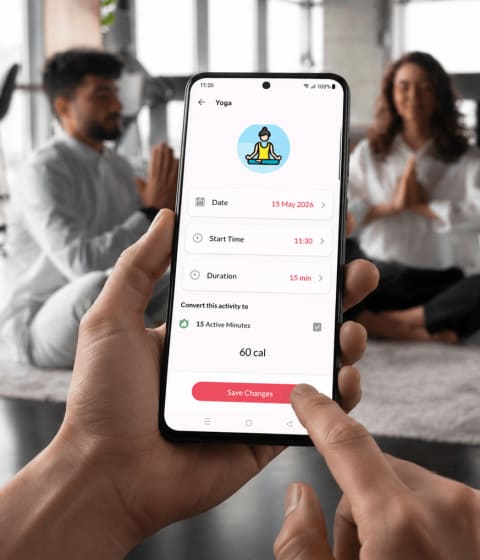
Platforms like Vantage Fit make this straightforward for HR teams: employees earn points for active minutes, compete on real-time leaderboards, and sync progress automatically with Apple Watch, Fitbit, and Garmin.
Even a 10-minute office walk or a stair climb between meetings counts toward a step challenge goal, so employees build the movement habit without having to overhaul their day.
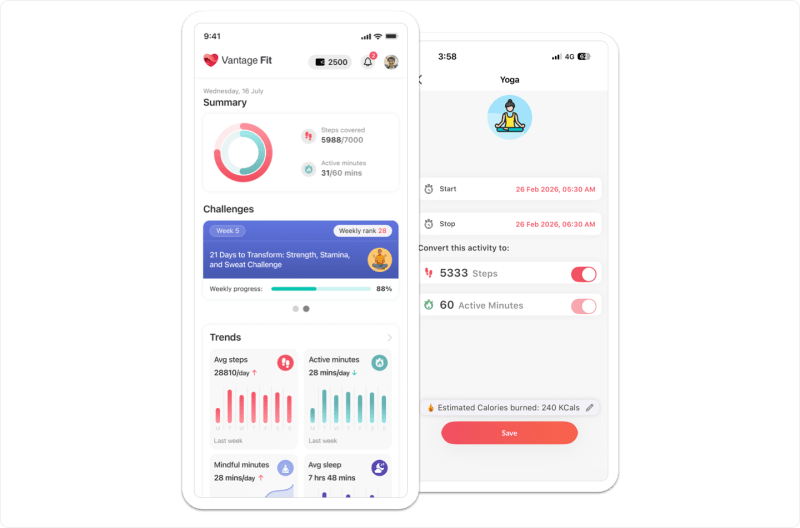
Niche Technology saw this in practice when they ran a team step challenge. As their wellness coordinator Tara Shore put it:
"The steps challenge has been a game-changer! It encourages employees to be more active in a way that’s fun and competitive."
— Tara Shore, Wellness Coordinator, Niche Technology
6. Design the Pantry, Restroom, and Other Utility Rooms Further Away from the Workspace
Now, do not get alarmed. I do not speak of making the restroom or pantry challenging to assess.
But I am certainly in favor of getting employees to walk significantly twice every two hours. When the restroom is 2 minutes away, an employee has walked back and forth for at least 4 minutes back and forth.
Similarly, the pantry is the second-most visited space in an office. The pantry is the hub of fun conversations in my office while brewing a hot cup of coffee. But since it is on the topmost floor of the building, I walk at least a dozen steps each time I crave coffee or a snack.
7. Find Ways to Gamify Exercise
Adding game-like elements to any non-game activity can be a highly motivating force, unlike any other method. Research published in the ACM Digital Library in 2024 shows that fostering employee wellness frequently includes a blend of competitive and collaborative games for staff.
Games designed for Fun Fridays or even a couple of days in a week have the potential to get employees rolling their feet. For instance, being an introvert, I rarely take up fitness-related activities in groups.But I thoroughly enjoyed the team treasure hunt on my office’s lawn last week.
We also have other gamified challenges, such as weight loss and yoga, and Pilates in a three-month challenge, to name just two. We have data from a survey conducted after our employees participated in all four. The response has been incredibly encouraging.
92.7% say they would like to continue participating in the same soon. Upon enquiring what kept them going, I found, like myself, the sheer joy of competing with colleagues worked for them, too. And for the sake of the sweet smell of victory.
Here are 5 Experiments that Worked for Me in Combating a Sedentary Lifestyle at Work
1. Incorporate the 20-8-2 rule
This work pattern balances sitting, standing, and moving throughout the workday. It is an effective strategy designed to combat the adverse effects of sitting.
Two ways to implement this rule are explained as follows.
a. Invest in an Active Workstation
My office, for instance, invests significantly in height-adjustable desks. Workers whose job profile mainly requires them to sit are comfortable throughout the day.
Such an arrangement is vital to the successful implementation of the 20-8-2 rule. It allows you to transition between sitting and standing work positions quickly throughout the day.
b. Set Up Reminders
I have also utilized my smartwatch, phone alarms, and even browser extensions to remind myself when I have sat for over an hour. I ensure I stick by the choice to walk, stretch, or even move a little.
2. Take Micro-Breaks from Work
Regular breaks reduce the risk of muscle stiffness and fatigue. They also provide mental refreshment, which can enhance productivity and creativity.
When my colleagues and I take breaks from work, our go-to space is where we can do the minimum body stretches.
It is mostly the lounge room, the restroom, or the conference room.These breaks also serve as refreshments to our minds and spirits in the form of forging meaningful relationships at work.
3. Meet on the Move
Organizations are estimated to devote around 15% of their collective time to meetings. As per an article published by Harvard Business Review, a striking 71% of these meetings are deemed unproductive.
How about setting up meetings on the move?
Imagine the freedom from boredom and performance anxiety we could escape from while helping your muscles relax. Simply walk the talk, quite literally.
4. Schedule a Dedicated Time for Workout When Working from Home
To me personally, working from home offers ample scope to lead an active and healthy lifestyle while saving my time and expenses on travel. If you have the privilege to work from home, remember to make the most of it.
There are a bunch of things that you can do at home. Just take your work calls while prepping your meals, look out of the window often to soothe your eyes away from the screens, and take any opportunity to walk to and from your staircases.
5. Walk for at least 20 Minutes after Lunch
A brisk walk after lunch, with or without your colleagues, helps you digest your food before you sit for the rest of the day. This could even be a walk up and down your office stairs.
As someone who always ensures that I take a walk after lunch, I can testify firsthand to the innumerable benefits it brings. Be it better sleep hygiene, reduced bloating, or improved mood regulation, including relief from that classic post-lunch drowsiness that derails afternoon productivity. I have earned all this with a simple habit of walking after lunch at work.
What are the Risks of a Sedentary Lifestyle?
Five common risks associated with a sedentary lifestyle are:
1. Obesity
Most Americans haven’t worked in fields or factories for years now.Today, most of us are stuck sitting at our desks all day. That means less exercise daily.
A Stanford Medicine research article published in 2014 posited that one major culprit for the USA’s rising obesity is a sedentary lifestyle with little to no physical exercise.
2. Type 2 diabetes
The lower the level of physical activity, the greater the risk of diabetes. Physical activity helps you burn glucose for energy and makes cells more insulin-sensitive.
A joint position statement from the American College of Sports Medicine and the American Diabetes Association recommends at least 150 minutes of moderate to vigorous physical activity per week for patients with type 2 diabetes.
3. Cancer
A sedentary lifestyle has a direct bearing on an increase in insulin resistance in the body. Insulin resistance causes an increase in the levels of inflammation in the body. Inflammation, in turn, increases the risk of cancer development.
4. Cardiovascular disease
A sedentary lifestyle also poses a great deal of risk for catching cardiovascular diseases. Inactivity causes fatty material to build up in our arteries. When the arteries that carry blood to our heart get damaged and clogged by the fatty material, it can lead to a heart attack.
Let’s Wrap it Up
Employers play a crucial role in this transformation by creating opportunities for movement, gamifying exercise, and encouraging an active culture through flexible policies and resources.
Their consistent push towards a workplace culture of movement can take company productivity to the next level. Let’s make workplaces a hub of energy and vitality, ensuring work-life balance becomes a reality for all.
Frequently Asked Questions
How much sitting is too much during the workday?
Daily sitting for over eight hours without breaks is excessive and is considered too much.
How can I avoid a sedentary lifestyle when working from home?
Take regular breaks to prioritize personal time and activity. Also, avail yourself of a standing desk and avoid working beyond a set time.
What are some ways to stay active during long virtual meetings?
Incorporate subtle movements like seat exercises and if possible use standing desk or walk as you listen.
What are the health risks of a sedentary lifestyle?
The four covered above are obesity, type 2 diabetes, cancer, and cardiovascular disease. Inactivity lowers how much glucose you burn and raises insulin resistance, which drives inflammation, while fatty material builds up in the arteries. Physical inactivity is the fourth leading risk factor for global mortality.
What is the 20-8-2 rule?
It is a work pattern that splits every 30 minutes into 20 minutes sitting, 8 minutes standing, and 2 minutes moving. A height-adjustable desk makes the switch between sitting and standing quick enough to sustain, and a smartwatch or phone reminder handles the prompt to move.