Work fatigue is extreme tiredness and a reduced capacity to function that builds during the working day and is still there at the end of it. Occupational psychologists Frone and Tidwell split it three ways: physical, mental and emotional.
It belongs to the job rather than the person, which is what makes it something an employer can fix. And it shows in behaviour long before anyone says the word tired.
Do your employees seem demotivated, and perpetually tired to you?
Are they having difficulty finishing simple tasks?
Have they been calling in sick at work, more often than usual?
Answer yes to any of these and work fatigue is the likely cause. Left alone, it costs you output, quality, and the people who burn out first.
The earlier you see it, the easier it is to fix. Vantage Fit’s Admin Dashboard turns daily wellness data into a workforce trend, so the dip shows before anyone files a complaint.
Let us start with the three forms it takes, and what each one needs.
Key Takeaways
- Work fatigue belongs to the employer to solve, because the working day itself is what produces it.
- It comes in three forms, physical, mental and emotional, and each needs a different fix.
- The first signs show up as behaviour: missed details, short tempers, more sick days.
- Long shifts and night work raise injury rates, so the schedule is usually where the fix starts.
- Working 12-hour days carries a 37% higher injury risk, so fatigue is measurable before it is reported.
Types of Work Fatigue: Physical, Mental and Emotional
Work fatigue draws on three different kinds of energy, so it shows up in three different ways. Mayo Clinic describes fatigue as something that reduces energy, the ability to do things and the ability to focus, with ongoing fatigue affecting both quality of life and state of mind.
It is much more than an afternoon slump, and it is a marker of poor physical, mental, and emotional health.
1. Physical Work Fatigue

Physical fatigue is the draining or exhaustion of the body due to persistent tiredness. Body fatigue contributes to lower energy and motivation levels at work. At times, it is associated with cognitive and emotional exhaustion.
Any work can be enfeebling for you, be it physical labor or a sedentary job. And, if you frequently encounter physical tiredness, it’s high time you change your lifestyle choices. There can be several reasons for the weariness, but one must identify the cause and take action accordingly to eradicate it.
Work becomes less exciting with fatigue. If you see it building in yourself, start mending your health habits today.
2. Mental Work Fatigue

Mental fatigue is a form of exhaustion in the brain, and it is when one faces mental clogging or fog. It often leads to unproductivity, de-motivation, and decision making problems at work.
A combination of emotions and physical fatigue factors can lead to mental fatigue. Long-term conditions often can be depicted by apathy, cynicism, and irritability. While factors like demanding life events, low resilience, a challenging job, or procrastination contribute to mental weariness. But, most of the time, it is due to the cognitive burden or external pressure at work.
Vox sets out the two main explanations psychologists give for the tiredness that builds even when the work is not physical;
Hypothesis 1: we deplete an internal store of energy, an idea called ego depletion that many psychologists now doubt
Hypothesis 2: our motivation runs out
In today’s world, mental fatigue can make you feel left behind, whether personally or professionally. In order to reduce mental fatigue, practice mindfulness meditation and stress management activities that can prevent it. Overcoming fatigue can be challenging, but it is necessary for one’s overall wellness.
3. Emotional Work Fatigue
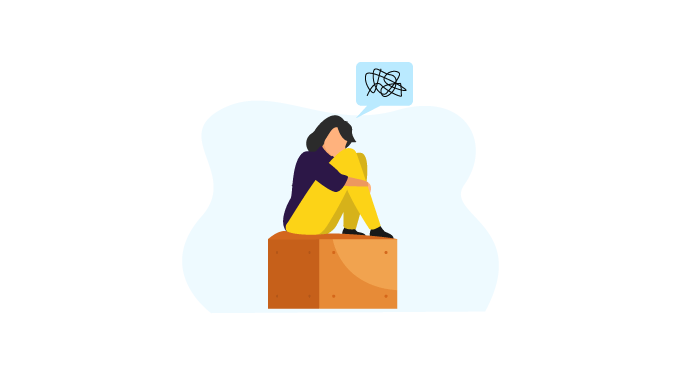
Emotional work fatigue refers to a condition where your employees experience extreme emotional tiredness and a reduced capacity to engage emotionally during or at the end of the working day.
In the post-covid world, remote working has led to the excessive use of video conferencing tools like Zoom, Skype, Google Hangout and Meet, FaceTime, etc.
Stanford’s Jeremy Bailenson traced the resulting Zoom Fatigue to four things video calls do that meetings in a room do not: you watch yourself all day, faces sit unnaturally close and hold your gaze, you are pinned in one spot, and you work harder to send and read body language through a webcam.
Today, it has become essential to focus on employees’ emotional agility to avoid emotional fatigue at work.
Read our blog on: Zoom Fatigue: Symptoms, Causes, and Management
Reasons for Experiencing Work Fatigue

Your employees might experience work fatigue due to several reasons. Here are some of the most common factors that lead to workers being fatigued at the workplace:
- Intense work burden
- Sleep deprivation
- Irregular work schedules or extended shifts
- Shift work
- Lack of physical and mental wellness activities
- Travel
- Improper lifestyle choices
- Organizational change
- Going against the Circadian rhythm
Symptoms of Work Fatigue

As an HR or employer who cares about the people who work in your company, you should keep an eye out for any of the following symptoms in your workforce:
1. Chronic tiredness or sleepiness
If your employees are always tired and exhausted, it is an obvious workplace fatigue case.
According to the National Safety Council, more than 43 percent of workers suffer from sleep deprivation.
2. Reduced concentration and focus
A symptom of work fatigue is the inability to pay attention to instructions, and details and a reduced capacity to focus on tasks.
3. Irritability
Irritability is another symptom of work fatigue. You might notice that an employee is moody or irritable lately. Before concluding it as a bad attitude problem, figure out the reason behind the behaviour. It might result from both work and personal issues.
4. Low Motivation
A lack of motivation to complete tasks can come across as your employee being careless or inactive. But the underlying reason for this might be burnout or emotional fatigue as well.
5. Increased instances of falling sick
Notice if employees are consistently unwell or been regularly absent from work. It might be because they are not well-rested, physically, and mentally. Increased absenteeism too, is a symptom of work fatigue.
6. Headaches
Headaches are often a sign of suffering from fatigue. If your employee is suffering from consistent headaches at work, ask them to stay well-hydrated and well-rested.
Feeling Tired at Work Every Day: What the Pattern Tells You
This one is for the person feeling it rather than the person managing it.
The useful question is when the tiredness arrives and when it lifts.
Fatigue that builds through the working day, sits heaviest in the afternoon, and eases on rest days is usually made by the job. Look at the shape of the week first: shift length, break timing, start times that move around, and how much of the day needs sustained concentration.
Low energy that is already there on waking, stays through a weekend, and holds on after a normal night’s sleep is a different signal. Mayo Clinic notes that fatigue which does not lift with rest, with no clear cause, is worth taking to a doctor.
The middle case is the common one at work: real tiredness caused by the job, which improves when the schedule does. Tracking how you feel across a few weeks makes the pattern visible, because the difference between a heavy fortnight and a standing problem is hard to judge from memory.
Vantage Fit’s Mental Well-being features give each employee a daily mood check-in, five points from very sad to very happy with nine reason categories behind it, which only they can open.
Ways in Which Work Fatigue Affects the Workplace

Workplace fatigue can have tangible effects on the way your employees perform. Consequently, it will affect the company’s performance and growth.
Here is how workplace fatigue affects your employees, and in turn, your organization:
1. Increased possibility of injuries
If your employees suffer from fatigue, they are more at risk of occupational hazards and injuries.
Physical and mental fatigue often results in loss of concentration, reduced alertness, poor hand-eye coordination, etc. Such a condition might be dangerous when your workers are operating with heavy machinery, using power tools, etc.
OSHA reports that working 12 hours per day is associated with a 37% increased risk of injury compared with shorter days.
Not only can these workplace injuries compromise employees’ lives but also incur business losses.
2. Negatively Impacts Decision Making
When your employees suffer from work fatigue, it affects their analytical abilities. It hampers their ability to think things through and present logical solutions at any given point in time.
Hasty and impulsive decisions made when one is mentally tired will naturally lead to inconvenience and troubles.
3. Lowers employee engagement and productivity
OSHA also estimates that fatigue-related lost productive work time costs US employers $136.4 billion a year.
If your employees are physically and mentally exhausted, productivity and engagement levels drop drastically. Work fatigue in employees will also lead to an increase in sick leaves and absenteeism, which will hamper your company’s overall growth.
How to Proactively Manage Work Fatigue

You now know about the probable symptoms, causes, and effects of work fatigue.
Let us look at the measures you can take to tackle work fatigue, and consequently, increase employee engagement and productivity.
- Schedule regular breaks and shifts during the workday
- Let your employees have two consecutive days of rest in a week
- Educate and train your employees on work fatigue and what they can do to prevent or manage it
- Do not overload your employees with tasks. Strike a balance
- Incorporate a workplace wellness program aimed at keeping your employees physically, mentally, and emotionally fit.
- Introduce workplace meditation exercises
- Try and initiate an open conversation about mental health
- Let your workplace design and interiors be refreshing and peaceful with a lot of natural light, and minimal noise
- Talk about sleep disorders and have your insurance plans cover them
- Be empathetic and practice gratitude.
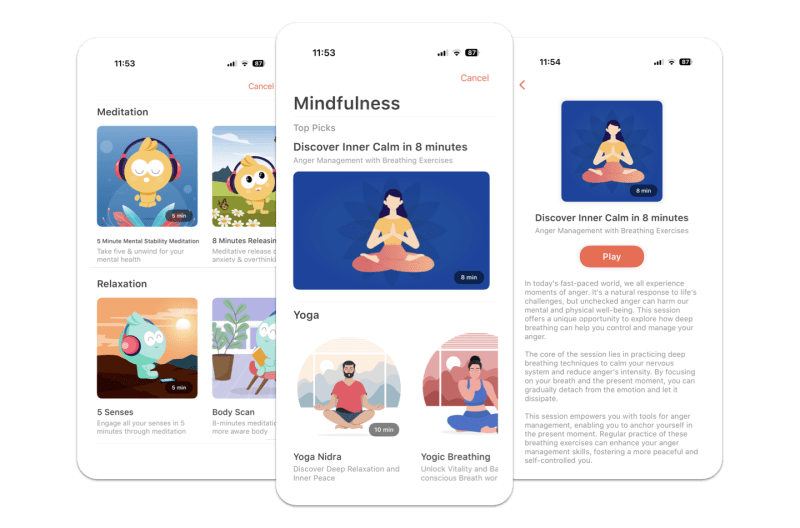
Recovery has to be easy to reach, or it competes with the fatigue it is meant to fix. Vantage Fit carries a library of guided audio sessions across seven categories, including relaxation, sleep and white noise, and the minutes feed the daily total next to steps. That gives a tired employee a three-minute breathing break at their desk, with no commute and no live class to book.
Treating fatigue as a standing commitment to employee wellness and stress management is what makes the gains hold. One-off initiatives fade as soon as schedule pressure returns.
Checkmarx, a cybersecurity company, ran structured wellness events with their team:
"It was an engaging and well-coordinated event that not only promoted healthy habits but also fostered a sense of community among participants."
— Shraddha Mishra, HR Generalist, Checkmarx
Frequently Asked Questions
How are stress and fatigue at work connected?
Stress and fatigue feed each other. Sustained stress disrupts sleep, and short sleep lowers tolerance for the next day's demands, so each one deepens the other. The practical difference is that stress comes from demand outstripping control, while fatigue comes from depleted capacity.
What is the difference between work fatigue and burnout?
Burnout is the further stage. The WHO's ICD-11 defines it as an occupational phenomenon with three dimensions: energy depletion, mental distance or cynicism about the job, and reduced professional efficacy. The practical test is recovery. Fatigue eases with rest, protected breaks and a steady schedule. Burnout holds on through all three, because the cynicism and the sense of ineffectiveness remain after the tiredness lifts.
How can employers reduce fatigue in the workplace?
Start with the schedule, because that is where most of it is made: regular breaks, two consecutive rest days, a cap on back-to-back long shifts, and predictable start times. Then look at load: realistic task volume, and quiet, well-lit space for work that needs concentration. Train managers to read the signs as fatigue rather than as attitude. Wellness provision helps people recover, and it works best alongside the scheduling fixes.
Do long or night shifts make work fatigue worse?
Yes, measurably. OSHA reports that accident and injury rates run 18% higher on evening shifts and 30% higher on night shifts than on day shifts. Night work also runs against the body clock, so sleep afterwards tends to be shorter and lighter. Rotating shifts forward rather than backward, and protecting consecutive rest days, reduces the effect.
In Conclusion
Thanks to the current hustle culture, work fatigue is a daily and common phenomenon at workspaces.
However, it can be and should be managed proactively.
Check if your company’s work culture is burdening your employees. Be willing to incorporate changes, and communicate extensively. A wellness program evaluation at least once a year will surface the patterns that daily management often misses.
Employees are the most valuable asset to any company. Ensure that their wellness remains a top priority for you.